Are County-Island Residents Paying City Taxes They Don't Owe?
A Peoria mailing address doesn’t make you a Peoria taxpayer. So who is protecting county-island residents from improper municipal taxation?
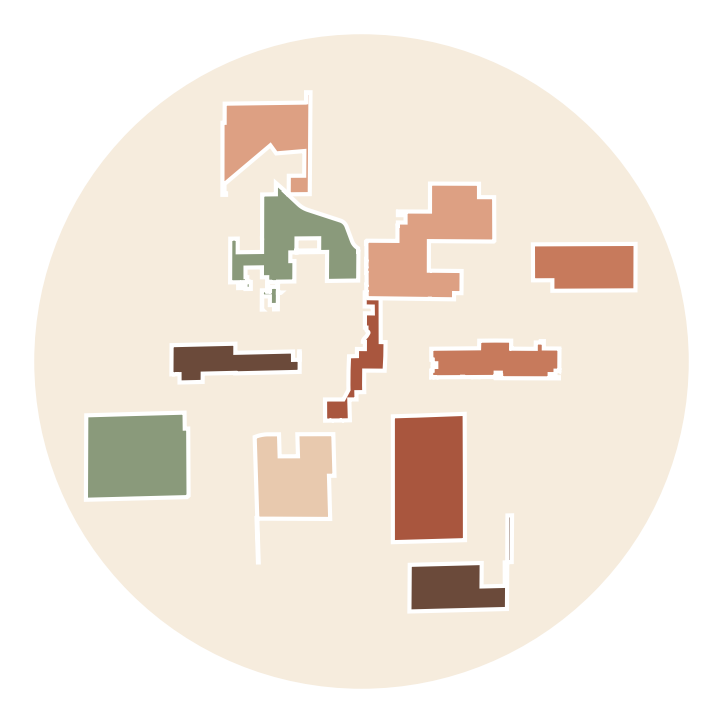
Thousands of residents live in unincorporated Maricopa County neighborhoods commonly known as county islands. Many of these properties carry Peoria mailing addresses and ZIP codes, even though they are not legally within the City of Peoria.
That distinction is important.
Living within Peoria’s Municipal Planning Area does not make someone a resident of the City of Peoria, nor does it automatically subject them to Peoria’s municipal taxes.
Yet Arizona’s system of collecting sales taxes from online purchases raises serious questions about whether county-island residents are being charged municipal taxes they do not legally owe.
This is not simply a theoretical concern. County-island residents are currently receiving recurring online subscription bills that include additional local taxes consistent with Peoria’s municipal tax rate.
CIC has identified examples involving multiple online service providers. We believe this issue warrants a broader investigation into how often county-island households are incorrectly classified as incorporated Peoria for tax purposes.
The problem with a Peoria address
Online retailers and subscription providers are generally responsible for determining the applicable tax jurisdiction when collecting taxes from customers.
For taxable remote retail purchases, the combined Arizona and Maricopa County tax rate is generally 6.3%. Within incorporated Peoria, the city’s additional 1.8% retail tax brings that rate to 8.1%.
But county-island residents frequently have credit cards, billing addresses, and mailing addresses identifying their location as Peoria, Arizona.
Peoria is their mailing address, not their municipal government.
If a retailer incorrectly interprets that mailing address as proof that a property lies inside city boundaries, the resulting tax calculation may include a municipal tax that should not apply.
Not all services are taxed under the same classification, but the underlying jurisdictional concern remains.
This is happening today
Residents of county islands are currently being charged additional local taxes on certain online purchases and monthly subscriptions.
One documented example involves a Google Workspace account billed to a county-island residence. Its monthly statements include an additional 1.8% local tax component, despite the property being outside incorporated Peoria.
Other online subscription services have also issued statements with tax rates consistent with incorporated Peoria.
These are actual billing statements, not hypothetical estimates.
Determining whether each charge is legally improper requires confirming the service’s tax classification and sourcing rules. Determining whether Peoria received the additional revenue requires examining how the vendors reported it.
Nevertheless, these records raise a significant concern: a county-island address may be incorrectly treated as part of the City of Peoria simply because its postal address says Peoria.
How many other households are experiencing the same issue? How many businesses are making similar calculations? And how long has this been happening?
The City of Peoria knows where its boundaries are
The City of Peoria is fully aware that unincorporated county islands exist within its Municipal Planning Area. These neighborhoods are not new, and their municipal status is not a mystery.
The city knows that properties outside its incorporated boundaries carry Peoria postal addresses.
County-island residents have now identified actual billing statements showing additional local taxes consistent with Peoria’s city rate.
CIC believes the city has an obligation to account for revenue attributed to Peoria and investigate whether any portion originates from transactions that should have been assigned to unincorporated Maricopa County.
The city should not rely exclusively on retailers to identify and voluntarily correct potentially improper collections.
Peoria’s knowledge of its boundaries is established. What must now be determined is whether the city has received revenue incorrectly allocated from those addresses, what it knew about such allocations, and what corrective action it has taken.
Once presented with documented examples, Peoria and ADOR should provide clear answers rather than leave residents to negotiate individually with multinational corporations.
Who receives the money?
Arizona’s transaction privilege tax system places responsibility for calculating, collecting, and reporting taxes primarily on businesses.
Retailers report taxes by jurisdiction, and the Arizona Department of Revenue administers collections and municipal distributions.
When a transaction is incorrectly assigned to a municipality, tax revenue may be distributed to a city that was not legally entitled to receive it.
This is not merely hypothetical. A 2019 Arizona Auditor General report identified weaknesses in tax-jurisdiction reporting and documented problems with the accuracy of municipal tax distributions.
The larger question is whether those problems have been adequately addressed, particularly for unincorporated properties that share city mailing addresses.
The consumer has little control
Perhaps the most troubling issue is the lack of an effective remedy for residents.
The customer pays the tax. The retailer reports and remits it. The government receives and distributes it.
But when the amount or jurisdiction is wrong, the individual who paid the charge generally cannot directly correct the retailer’s tax return or use the ordinary vendor refund process.
Arizona courts have recognized the distinction between the business legally responsible for transaction privilege tax and the customer who ultimately bears its economic cost.
In 2015, Arizona Senate Bill 1133 proposed expanding certain consumer rights to pursue refunds when vendors would not cooperate.
The League of Arizona Cities and Towns formally opposed that legislation.
The League represents municipal governments, including Peoria, and receives financial support through municipal membership dues paid with public funds.
Peoria’s own City Council records document approval of $13,800 in annual membership dues to the League in August 2022.
Although this payment was not identified as financing opposition to SB 1133, it demonstrates Peoria’s financial support for an organization that opposed legislation expanding certain consumer refund rights.
The League cited concerns about fraudulent refund claims and the legal definition of a taxpayer.
But who is protecting consumers from improper tax collections?
Why should government have powerful tools to collect taxes while residents lack equally effective tools to recover taxes collected in error?
An incentive problem that deserves scrutiny
If a municipality receives tax revenue from transactions outside its boundaries, correcting those errors could reduce the municipality’s revenue.
That creates a financial incentive that must be balanced by meaningful oversight, accurate jurisdictional reporting, and enforceable consumer protections.
The question is not whether every incorrect calculation establishes intentional wrongdoing. It is whether municipalities and state officials have adequate procedures to detect these errors, correct improperly allocated revenue, and protect affected residents.
County-island residents should not be forced to persuade multinational corporations to change their tax calculations without meaningful support from the government agencies responsible for administering those taxes.
CIC is asking county-island residents to review their bills
We need your help documenting how widespread this problem may be.
CIC encourages every county-island household to review its online purchases, recurring subscriptions, digital services, and monthly billing statements.
Look for additional city or local taxes, particularly an extra 1.8% tax or a combined rate of 8.1% on transactions that may be subject to the unincorporated Maricopa County rate of 6.3%.
Not every 8.1% charge is automatically improper; the applicable tax classification matters.
If you find a suspicious charge, please share a copy of the bill or receipt with CIC.
We encourage residents to provide:
- The name of the company or service provider.
- A copy of the invoice, receipt, or monthly billing statement showing the tax.
- The date of the transaction and the amount of tax charged.
- Confirmation that the billing or delivery address is within an unincorporated county island.
Please remove credit card numbers, account numbers, and other sensitive personal information before submitting documents. Address information needed to verify jurisdiction should be handled privately, not posted publicly.
CIC intends to compile these records into a documented body of evidence for submission to the City of Peoria, the Arizona Department of Revenue, and other appropriate oversight and consumer-protection authorities.
The objective is to establish how many businesses may be applying the wrong jurisdiction, how many residents are affected, and whether improperly collected municipal taxes have been allocated to Peoria.
The more evidence residents contribute, the more comprehensive the investigation can become.
One resident questioning a few dollars may be easy to dismiss. An organized community presenting documented billing records across multiple providers and households deserves a formal government response.
Questions Peoria must answer
CIC believes the City of Peoria and Arizona Department of Revenue should publicly address the following questions:
- Is Peoria receiving municipal tax revenue from transactions involving county-island addresses outside its incorporated boundaries?
- What procedures exist to detect and correct improper municipal tax allocations?
- Does the state’s tax reporting system distinguish between incorporated Peoria addresses and unincorporated county islands sharing Peoria mailing addresses?
- What happens to money collected and distributed to the wrong municipality, and how does the resident who paid it obtain reimbursement?
- Has Peoria requested an audit or reconciliation of municipal tax collections associated with its surrounding county islands?
- Given documented examples of questionable additional local tax charges, will Peoria formally request an investigation by ADOR?
- What has the city already done to identify possible tax-jurisdiction errors involving county islands?
- Who within Peoria city government is responsible for investigating this issue, and will the city commit to a public response and corrective action where necessary?
County-island residents deserve answers
This is not about avoiding legitimate taxes. County-island residents pay state and county taxes, just like everyone else.
It is about ensuring residents are not assessed municipal taxes for a city in which they do not legally reside simply because their postal address carries that city’s name.
Across potentially thousands of households and years of transactions, even small errors could represent a substantial amount of money. The actual total cannot be established without examining the relevant records.
CIC is calling on Peoria’s Mayor, City Council, City Manager, Finance Department, and the Arizona Department of Revenue to address this issue publicly.
We are also asking county-island residents to participate by reviewing their bills and helping us assemble the documentation needed to demand a complete accounting.
We want to know whether municipal tax revenue is being incorrectly collected and allocated, how much may be affected, what safeguards are in place, and, most importantly, who is going to correct it.
County-island residents deserve accurate taxation, transparent accounting, an effective path to reimbursement, and a government accountable for every dollar it collects.
What you can do: Review your bills and email copies of any questionable charges to countyislandcommunity@gmail.com, with card and account numbers removed. You can also send us a message.
Sources and public records
- Arizona Department of Revenue: Address-Specific Tax Lookup
- ADOR: Remote Seller Tax Sourcing Rules
- ADOR: TPT Refund Procedures
- Arizona Auditor General: 2019 Transaction Privilege Tax Audit
- League of Arizona Cities and Towns: Opposition to SB 1133
- Peoria City Council: August 23, 2022, Membership Dues Approval
CIC Community Watch: Protecting the interests, rights, and welfare of our unincorporated communities.